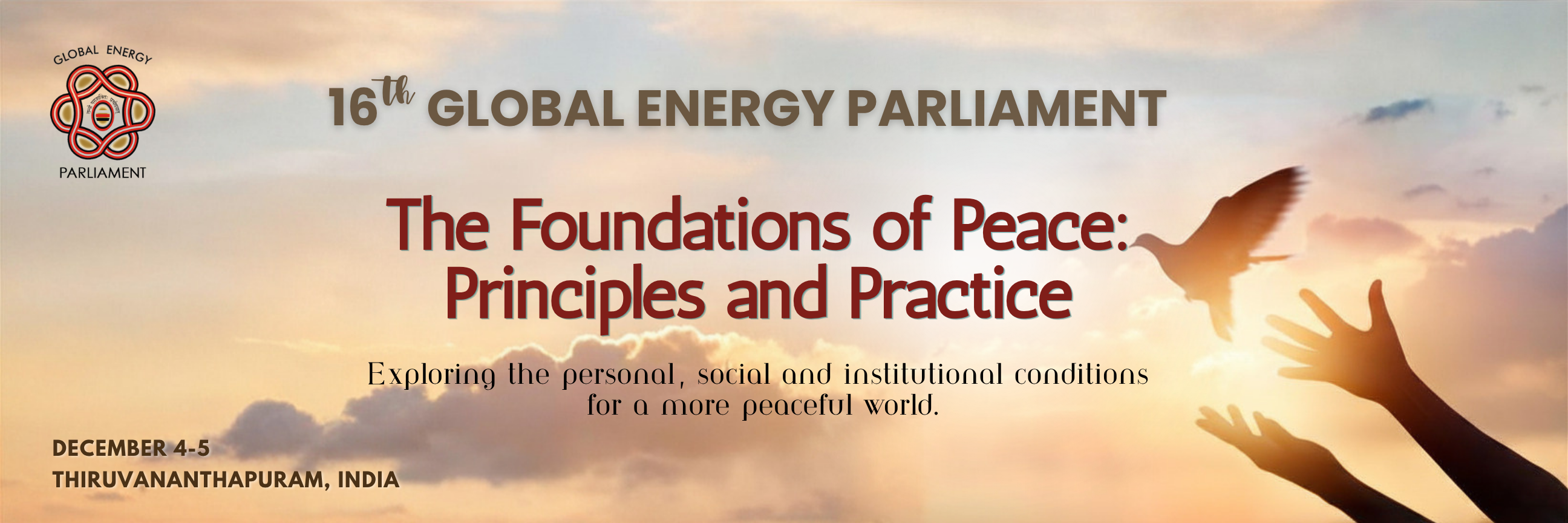
The Global Energy Parliament warmly welcomes you to Thiruvananthapuram for a powerful global conversation during our 16th annual session of Parliament. This year’s theme — "The Foundations of Peace: Principles and Practice" — examines theories and practical measures for creating lasting peace. We will explore the personal, social and institutional conditions necessary for a more peaceful world.
Over two days, we’ll hear from international experts, scientists, thought leaders, and Members of Parliament as they present research, policy ideas, and concrete practices towards a more peaceful world. You’ll have the chance to join discussions, contribute your insights, and help shape real actions for a better future.
This event is open to everyone—not just academics or professionals. The Global Energy Parliament was founded by His Holiness Jagadguru Swami Isa as a forum for every individual to learn how to build a better world.
If you have ideas about building peace, or are touched by conflict and looking for ways to make a change, you will find the parliament a deeply enriching experience.

The first day focuses on the contribution of science, bringing together perspectives from diverse fields, including physics, neuroscience, psychology, social sciences and ancient knowledge systems.
The second day will broaden the discussion to other sectors of society. A general program is given below.
Exploring the personal, social and institutional conditions for a more peaceful world.
Peace is often treated as the absence of conflict. A ceasefire can end violence without creating the environment for lasting peace, just as a society may be free from open violence without having laid the foundations for peace to be sustainable. Sustainable peace therefore calls for more than agreements between opposing sides. It requires an understanding of the conditions that allow individuals, societies and institutions to live and function without resorting to conflict.
The human capacity for innovation is as old as the human capacity for conflict. We have developed extraordinarily sophisticated systems of knowledge, communication and governance, yet our ability to create and maintain peace has not kept pace with our ability to create new forms of destruction. The challenge is therefore not simply to desire peace, but to understand it well enough to make it sustainable.
Last year, the Global Energy Parliament explored the relationship between rising global temperatures and emotional agitation—the connection between inner and outer heat. In its 16th year, the Parliament now turns to methods of maintaining coolness: the knowledge, capacities and conditions that enable peaceful ways of living to be established and maintained.
This inquiry extends beyond diplomacy and conflict resolution. Peace has personal, social and institutional dimensions. It concerns the way individuals understand themselves and relate to others; what societies value and how they are organised; and the way institutions are designed. Each sector of society has knowledge and experience that can contribute to this understanding.
The aim is to move from aspiration to understanding and from understanding to practice: first, towards a common framework for the foundations of sustainable peace; and second, towards practical principles that individuals, societies and institutions can apply to establish and maintain it.
The conclusions and proposals emerging from the Parliament will be conveyed to international leaders and relevant institutions, including the United Nations.
We are the first global parliament, designed for human beings who feel a responsibility to improve the conditions of life on Earth. People from all nations join together and examine some of the most formidable challenges facing the world today, collaborating on innovative, viable and science-based solutions in a spirit of harmony, peace, and brotherhood.
The Global Energy Parliament encourages meaningful exchanges and collaborations in a structured democratic process – devoid of politics.
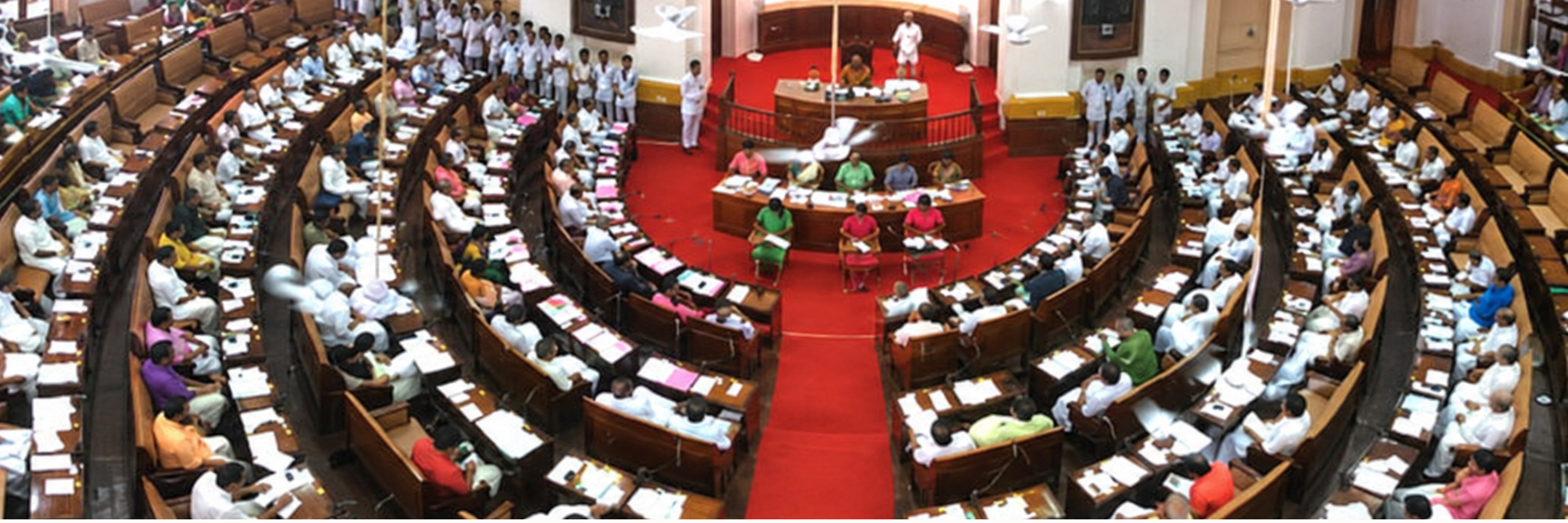
Every Member of Parliament has a voice, and to give time to all, we have a formal structured format. The Honourable Speaker controls the discussions. Members of Parliament can raise questions, give submissions, respond to others, and vote.
Our aim is to arrive at decisions on recommendations to the world's governments and international agencies that will become a Resolution or an Act of Parliament. We share these with all governments and selected international agencies worldwide.

 GlobalEnergyParliament
  GEnergyP
  GlblEnergyParliament
  GEnergyP